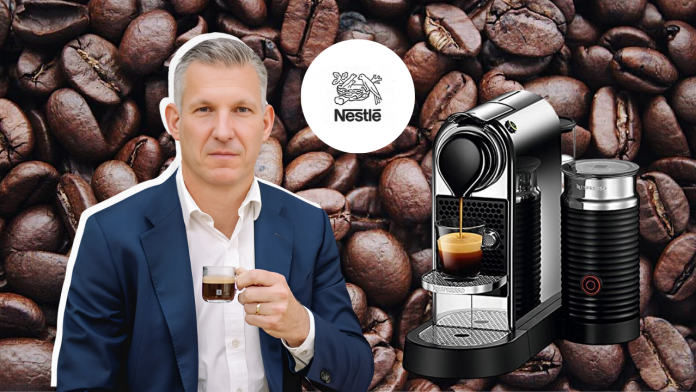
Nespresso, the premium coffee brand under Swiss multinational Nestlé SA, has officially entered the Indian market with its first boutique store, launched on Thursday. The company sees India as a key market, both for its growing coffee culture and as a vital source of high-quality coffee beans.
Continue Exploring: “Kuch Nahi Hoga”—Anupam Mittal Challenges This Dangerous Mindset in Policy Bazaar’s New Ad
India’s Coffee Boom: A Big Opportunity for Nespresso

Philipp Navratil, Nespresso’s CEO, is bullish on India’s potential, stating that the country presents a “massive opportunity” for premium coffee. With coffee consumption and café culture on the rise, Nespresso plans to expand its presence with more boutique stores, where customers can experience its signature coffee blends and high-end machines firsthand.
“So we are here for the long term, we are now open, and we will stay here forever. India is a coffee shop country, and we live in India,” Navratil told PTI.
The company has partnered with Thakral Innovations as its official distributor in India, ensuring that Nespresso’s full range of coffee products reaches both retail consumers and business clients.

Continue Exploring: Lahori Beverages Nears ₹450 Crore Fundraise as Valuation Soars to ₹2,500 Crore – A New Challenger in India’s Booming Drinks Market
Expanding Sourcing from India
Nespresso has been sourcing premium green coffee from India since 2011, working directly with around 2,000 farmers in Karnataka. Currently, Indian coffee is used in nearly 20% of Nespresso’s global blends. However, Navratil confirmed that this number is set to increase as the brand deepens its commitment to Indian coffee growers.
“We had an Indian single-origin, master-origin capsule that we would sell everywhere, but not in India. Bringing that back to India now is closing the circle—from farm to cup—now also for Indian consumers,” Navratil said.
With growing global demand for Indian coffee, Nespresso is looking to expand its sourcing operations, ensuring greater support for farmers while strengthening its supply chain.