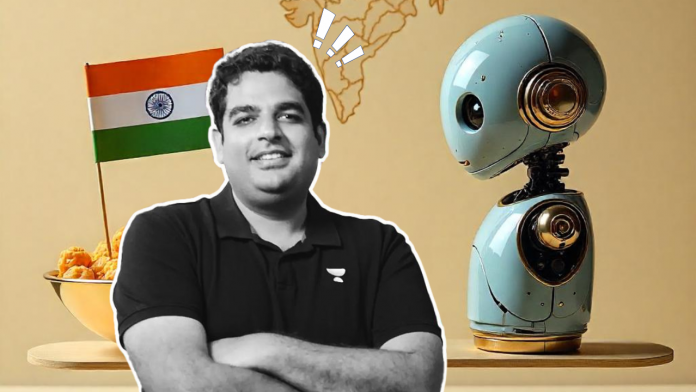
Gaurav Munjal, the CEO of Unacademy and Airlearn, has kicked a hornet’s nest with a sharp critique on LinkedIn about India’s lukewarm interest in artificial intelligence. “Global AI investment? $465 billion. India? Not even $1 billion,” he wrote. “We’re busy building Bhujia companies while the rest of the world builds the future.”
His post—blunt, irreverent, and impossible to ignore—touched a nerve in India’s startup ecosystem. While nations like the U.S. and China are pouring billions into AI research and ventures, India appears to be stuck playing it safe with traditional business models. In 2024 alone, American AI startups drew over $109 billion in private capital. China followed with $9.3 billion, and the U.K. attracted $4.5 billion. India, in contrast, stood at $1.16 billion—ranking 12th globally. That’s barely a ripple in a tidal wave.
Even looking at the bigger picture, India’s total private investment in AI between 2013 and 2024 adds up to just $11.29 billion—less than what the U.S. managed in a single year.

To be fair, the Indian government has begun to push the AI agenda. Earlier this year, it greenlit a ₹10,372 crore budget for the India AI Mission, spread across five years. But public money, no matter how well-intentioned, won’t close the gap without private investors stepping up and entrepreneurs taking bolder bets.
Continue Exploring: Lahori Beverages Nears ₹450 Crore Fundraise as Valuation Soars to ₹2,500 Crore – A New Challenger in India’s Booming Drinks Market
Munjal’s post stirred a mix of reactions. Some chuckled at the “Bhujia companies” jibe. Others used the moment to reflect on India’s innovation story—or lack of one.

“Let’s be honest,” one commenter wrote. “India’s tech rise was powered by IT services giants like TCS and Infosys. We built a generation of brilliant coders—but few risk-takers. We learned to deliver, not disrupt. We became the back office of the world, not its brain.”
Whether you agree with Munjal or not, one thing’s clear: India has the talent and ambition. What it needs now is a bigger appetite for risk—and fewer comfort-zone ventures.