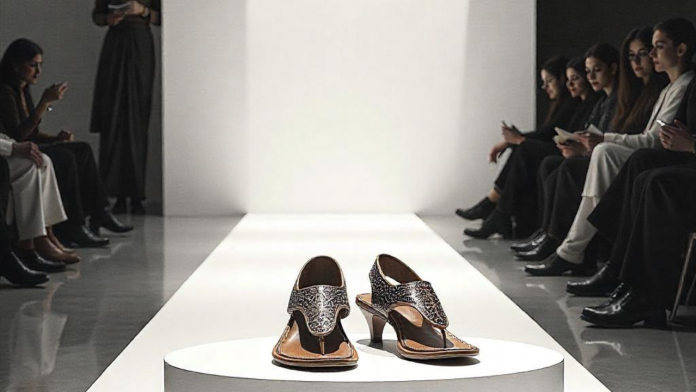
So… Prada made Kolhapuris. And now everyone suddenly has an opinion.
For over a week now, Instagram, fashion circles, and desi Twitter have been on fire over what’s now being dubbed #Kolhapurigate — Prada’s “India-inspired” sandals that bear an uncanny resemblance to our good old Kolhapuri chappals. The question is, what exactly are we mad about?
At first glance, the outrage is understandable. Here’s a luxury European brand dropping what looks like a rebranded Indian staple with zero credit given — until the internet dragged them for it. And sure, after the noise, Prada admitted the sandals drew from India and promised to “engage with artisans ethically.” Whatever that means.

Continue Exploring: Lahori Beverages Nears ₹450 Crore Fundraise as Valuation Soars to ₹2,500 Crore – A New Challenger in India’s Booming Drinks Market
But let’s take a second to ask — why did it take Prada to get us to care?
India is home to over 3,000 indigenous crafts. The Kolhapuri chappal isn’t just a leather sandal — it’s a living tradition, a GI-tagged product made by artisans whose names most of us don’t even know. These are people whose work barely sells on Flipkart, let alone walks Paris runways. And yet, here we are — foaming at the mouth now that someone else made money off it.

“I’m seeing the same people outraged over Prada who wouldn’t buy handmade if their life depended on it,” says a comment on The Hindu’s Instagram post. “You’re not angry because the craft was stolen. You’re angry someone else made it cool first.”
Burn. But… fair?
Fashion commentator and designer Purushu Arie also weighed in, saying this isn’t about cultural appropriation — it’s about who gets to appropriate. “Kolhapuris aren’t just Indian,” he wrote, “they’re rooted in Dalit craftsmanship.” The irony? When global brands take from marginalised communities, they’re called out. But when upper-caste Indians do the same — silence.
It’s uncomfortable. And it should be.
Still, the situation hasn’t been all doom and fury. Harshwardhan Patwardhan, founder of Chappers, a homegrown Kolhapuri brand, says the spotlight has actually helped. His social media engagement shot up by 400%, and sales rose 30–40% after the controversy. In a twisted way, Prada may have done what India never did — made Kolhapuris aspirational again.
Continue Exploring: “Kuch Nahi Hoga”—Anupam Mittal Challenges This Dangerous Mindset in Policy Bazaar’s New Ad
Designer Suhail Sahrawat offered a slightly more balanced take: “Most designers aren’t scheming villains plotting to steal culture. A lot of design is referential, often unintentionally.” Fair point. But when millions of dollars are involved, and people’s cultural legacies are at stake, accidental doesn’t cut it anymore.